It is the community of scientists and researchers who started using GPU for computing at the turn of the century. They discovered the usefulness and capability of GPU for computation as a means of performing a wide range of scientific applications. The only obstacle to its utilization was its lack of compatibility with graphic programming language. To overcome this handicap scientist modified GPU and added high level computer language support.
Most of the modern computers are installed with GPU to perform graphic related tasks. It has made it possible to invent computer games and develop animation movies. Among the hitches that one may experience while using these applications is the drivers. While the current ones can be successively used, there are instances when the older versions and models of the drivers are required to be updated to run this application successfully.
For a successful use of the GPU program ensure your computer has an inherent capability to run it depending on the operating system installed. Each operating system has its own version of GPU program. The type of the adaptor and memory size in your computer also counts. Take care of any special requirements that may arise as a result of the project you intend carry out.
GPU has the ability to run hundreds of parallel threads at a go owing to its many parallel cores and the hybrid nature of this technology. Unlike CPUs’ which can handle one operation at time, GPU subdivides data into many units and processes them simultaneously. This is the reason behind the superfast GPU operation.
With this high speed and accurate performance many programmers turn to GPU to execute their task. The speed can be enhanced even further if the CPU is methodically and regularly offloaded. With emergence of new technologies in addition to parallel processing GPU computing is bound to improve even further. (you also may want to learn about 1U Servers)
To avoid unsteady graphic output and the need change preferences, it is better to perform GPU computing with your computer switched off. Have it configured to automatically switch off when incompatible operations are run. These are important aspects of GPU computing that should be observed to ensure an optimal performance of the applications.
For as long as the necessary prerequisites such as parallel code and relevant language conversion are in place, GPU will give you amazing results. The amount of work which GPU handles makes it an economical application. The next step is to develop multi GPU systems which will astonish the world even further.

Showing posts with label gpu computing. Show all posts
Showing posts with label gpu computing. Show all posts
Thursday, September 22, 2011

Tuesday, August 30, 2011
Revisiting the Computer GPU Computing Goodies
An acronym for graphics processing unit, GPU, when used together with CPU or Central Processing for performing engineering and scientific computations, the process is known as GPU computing. One of the main reasons as to why a lot of users use GPU computing is because it completes the work in extremely less time since the entire workload is distributed equally, i.e. the calculations are handled by the GPU while the sequential aspect is taken care of by the CPU.
At the turn of the century the use of GPU for the purpose of computing was initiated by researchers as well as by scientists. They realized that using GPU for the purpose of computations was extremely beneficial because of its huge range of scientific applications except for one problem, that it was not compatible with the programming language. However this problem was solved by means of making certain changes and making the system supportive of high level computer languages after which it became more versatile.
These days most of the computers come with GPU which makes it easy to design the graphics used in animation movies as well as computer games. Also, the GPU perform most of the graphics output functions. There is one slight factor that needs to be kept in mind and that is sometimes the current driver may be compatible but a lot of times it requires the latest models and versions of drivers for running GPU.
Before using GPU on your computer you should check whether your system has the capability to host it or not. Some computers might have it, some might not and it all depends on the operating system installed on your computer because specific GPU programs are present for each and every operating system. Few other factors that should be kept in mind are the type of adaptor, the needs of your project and the size of the memory. These should be checked in order to make sure that they are compatible.
The hybrid nature of this technology enables it to run numerous parallel threads thanks to the hundreds of parallel cores featured in it. Unlike the CPUs that specialize in serial operations, the data entered into the GPU is split into several fragments and each of these fragments are processed in parallel. Therefore this reveals the secret as to why the speed is so high.
Programmers can take advantage of this parallel processing architecture and perform even the most critical sections of their work quickly as well as accurately. What’s more, if the CPU is offloaded gradually and systematically, then there would be a phenomenal increase in speed and if coupled with newer technologies, the speed can be increased to a truly impressive level.
It is important for users to be aware of the fact that GPU computing is a function that is performed only after the computer is switched off. If this is not followed then the graphic output would not be steady and also one will have to alter or modify the preferences. One can also configure it in such a way that it would switch off automatically when execution of incompatible operations is taking place.
Considering the amount of work that it can perform, the GPU is an economical application. If you want an even more advanced option then you can consider using a multi GPU system. The GPU along with the right language conversion and primary requirements like the parallel code is indeed an impressive and powerful team.
At the turn of the century the use of GPU for the purpose of computing was initiated by researchers as well as by scientists. They realized that using GPU for the purpose of computations was extremely beneficial because of its huge range of scientific applications except for one problem, that it was not compatible with the programming language. However this problem was solved by means of making certain changes and making the system supportive of high level computer languages after which it became more versatile.
These days most of the computers come with GPU which makes it easy to design the graphics used in animation movies as well as computer games. Also, the GPU perform most of the graphics output functions. There is one slight factor that needs to be kept in mind and that is sometimes the current driver may be compatible but a lot of times it requires the latest models and versions of drivers for running GPU.
Before using GPU on your computer you should check whether your system has the capability to host it or not. Some computers might have it, some might not and it all depends on the operating system installed on your computer because specific GPU programs are present for each and every operating system. Few other factors that should be kept in mind are the type of adaptor, the needs of your project and the size of the memory. These should be checked in order to make sure that they are compatible.
The hybrid nature of this technology enables it to run numerous parallel threads thanks to the hundreds of parallel cores featured in it. Unlike the CPUs that specialize in serial operations, the data entered into the GPU is split into several fragments and each of these fragments are processed in parallel. Therefore this reveals the secret as to why the speed is so high.
Programmers can take advantage of this parallel processing architecture and perform even the most critical sections of their work quickly as well as accurately. What’s more, if the CPU is offloaded gradually and systematically, then there would be a phenomenal increase in speed and if coupled with newer technologies, the speed can be increased to a truly impressive level.
It is important for users to be aware of the fact that GPU computing is a function that is performed only after the computer is switched off. If this is not followed then the graphic output would not be steady and also one will have to alter or modify the preferences. One can also configure it in such a way that it would switch off automatically when execution of incompatible operations is taking place.
Considering the amount of work that it can perform, the GPU is an economical application. If you want an even more advanced option then you can consider using a multi GPU system. The GPU along with the right language conversion and primary requirements like the parallel code is indeed an impressive and powerful team.
Tuesday, August 2, 2011
An Overview of GPU Computing Yeehaw!
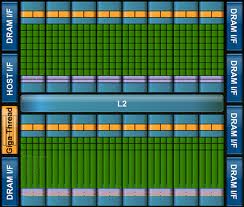
The use of GPU for computing began at the turn of the century courtesy of the computer scientists and researchers who started making use of GPU for computations and found that it was a tremendous catalyst for a wide range of scientific applications. Only one hurdle which remained was that of compatibility in terms of graphics programming language and this was overcome by modifying the GPU and adding support for high level computer languages.
Today most of the computers are equipped with GPU which accounts not only for most of their graphics related output but also for the graphics used in computer games and animation movies. One of the considerations however is the driver and while the current drive may be suitable, there are times when the later versions and models of drivers may be required for running this application.
Prior to using GPU on a computer it is essential to check whether the device has the in-built capability – this may vary according to the operating system being used and there are specific GPU programs for every operating system. Size of the memory and adaptor types are some of the other factors which need to be checked out along with special requirements of the project to ensure compatibility.
Owing to the hybrid nature of GPU technology, this kind of computing application features hundreds of parallel cores and thus is capable of running as many parallel threads. As compared to CPUs’ which are specialized in serial operations, data fed into the GPU is split into many fragments each of which is processed in parallel thus explaining the high speed.
It is this parallel processing architecture which is being capitalized upon by programmers for performing the most critical sections of their task accurately and quickly.
Further research into this field has proved that if the CPU is offloaded systematically and gradually, the increase in speed is phenomenal and likely to improve even more with new technologies on the horizon. An important aspect which the user should be aware of is that GPU computing is performed only when the computer is switched off. Not heeding this advice would result in unsteady graphic output and moreover would also require a change in preferences.
It can also be configured to switch off automatically when incompatible operations are being run.
Subscribe to:
Posts (Atom)